


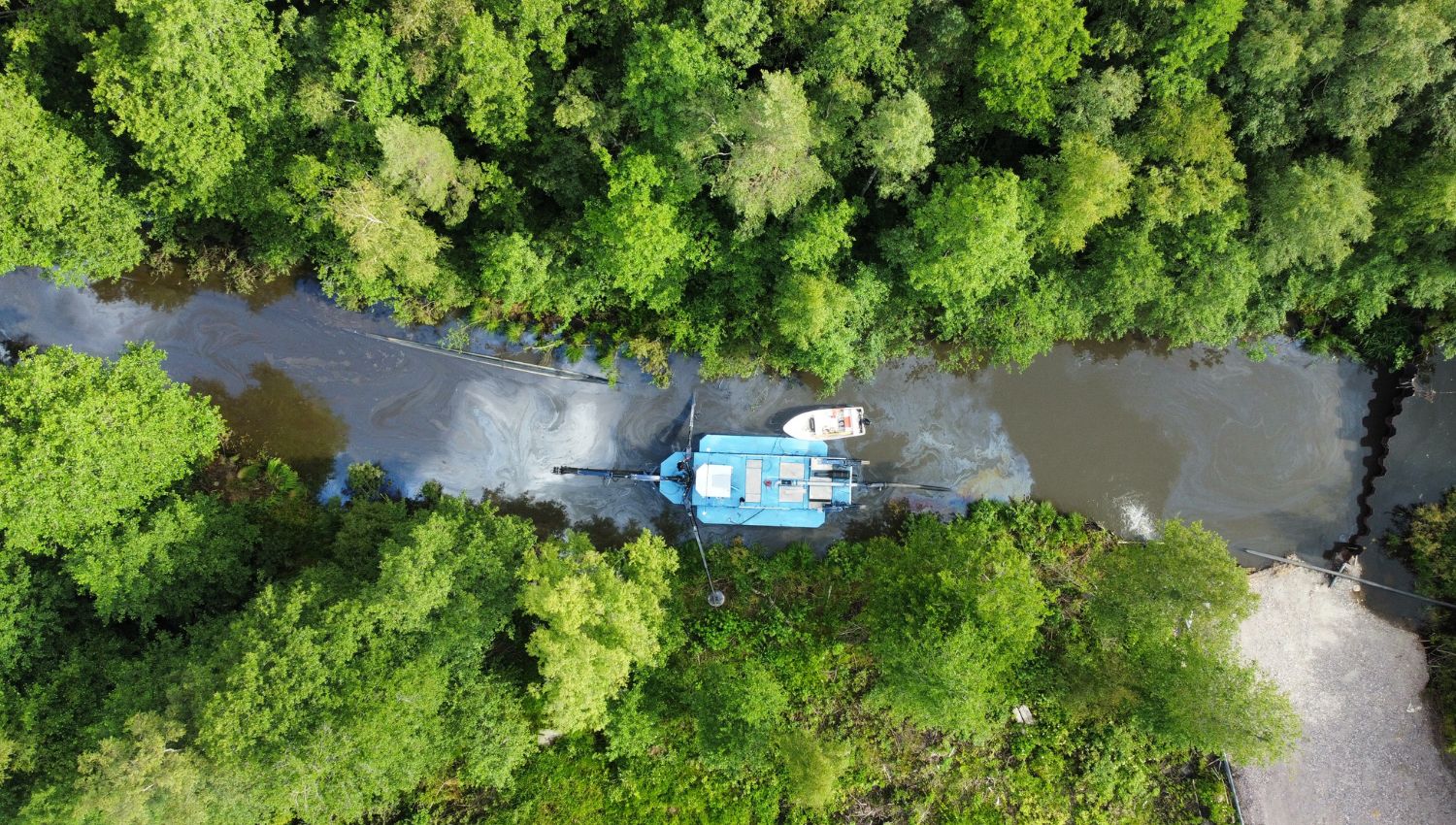
Preventive waterway maintenance

How to avoid costly damage and ensure the functionality of your waterways

Water bodies are essential habitats and important infrastructure for cities, municipalities, and businesses. However, uncontrolled plant growth, sediment deposits, and litter can quickly cause high costs and ecological damage.

Many waterway maintenance measures are only taken when problems become visible, which often involves considerable effort. Preventive waterway maintenance is the key here: continuous maintenance and monitoring prevent problems from arising in the first place.

With the right strategies, you can not only ensure the usability and ecological stability of your waterways, but also save costs in the long term.

Key points on preventive water management

  • Focus on cost-effectiveness:
    Continuous maintenance helps you avoid unpredictable emergency repairs and reduces your financial outlay by up to 60%.

  • Proactively avert risks:
    Proactive maintenance prevents hazards such as flooding, unstable embankments, and unpleasant odors or hygiene issues for residents.

  • Combine targeted measures:
    A coordinated mix of desludging and vegetation management preserves the usability of your water bodies for decades.

  • Structured planning:
    A thorough inventory and clear prioritization enable efficient use of resources and the selection of the optimal machine technology.

Request the ideal solution for your waterways

Identify risks

What happens without preventive water maintenance?

If regular and proactive water management is not carried out, risks quickly arise that place a strain on the environment, infrastructure, and budget alike. The following examples show which problems occur particularly frequently:

Odor issues & mosquito infestations

Stagnant or nutrient-rich water promotes decay processes that produce foul-smelling gases. These oxygen-depleted areas provide ideal breeding conditions for mosquitoes.

Overgrowth by aquatic plants

Invasive aquatic plants such as water hyacinths and reeds can quickly lead to overgrowth, displacing other plants and obstructing waterways. The dense vegetation reduces light and oxygen levels, disrupts the ecological balance, and can lead to silting, flooding, or clogged waterways.

Sediment deposits & silting

Sediment deposits such as sand, silt, and organic material settle at the bottom of water bodies. This reduces water depth, slows down the flow, and increases the risk of flooding.

Surface and waste pollution

Plastic waste, leaves, and flotsam accumulate on the water's surface, which not only detracts from the appearance but also negatively impacts ecosystems and tourism.

Shore erosion and unstable slopes

Lack of maintenance can lead to bank erosion and unstable slopes, which not only jeopardizes the stability of the waterways but can also affect the adjacent infrastructure.

Flooding & sewer blockages

Narrowed waterways, sediment deposits, and dense vegetation can significantly impede natural drainage. This increases the risk of backwater and flooding, especially after heavy rainfall. In urban areas, clogged canals and ditches quickly lead to damage to roads, buildings, and technical facilities.

Focus on legal certainty: The duty to maintain

Did you know that waterway maintenance is a legal obligation? According to the German Water Resources Act (WHG), waterways must be managed in such a way that proper drainage is maintained. Neglected maintenance can lead to massive liability risks for those responsible in the event of damage (e.g., flooding). Prevention is your best legal protection here.

Preventive measures

How to prevent damage

The key to preventive waterway maintenance lies in a combination of regular monitoring and targeted minor interventions.

Choosing the right method also plays a crucial role in prevention. Manual interventions are possible for smaller waterways, but are usually inefficient in cases of heavy vegetation or large areas.

Mechanical methods enable uniform and sustainable maintenance in these cases. You can find out which approaches have proven successful in the article “How to get rid of aquatic plants?”.

By consistently documenting plant growth, sediment deposition, and waste accumulation, you can identify anomalies at an early stage and take countermeasures in good time.

Aquatic plants should be mowed and removed regularly to prevent uncontrolled spread. Mow (invasive) aquatic plants outside of breeding seasons and collect plant debris promptly to prevent pollution.

Sediments impair water quality and destroy habitats for aquatic organisms. Suction dredgers can be used to desludge water bodies at an early stage in order to prevent a significant reduction in water depth and costly large-scale remediation work.

Floating debris, leaves, or plastic waste should be removed regularly to prevent hygiene problems and ensure ecological stability. A clean water surface not only contributes to the safety of the surrounding environment and wildlife, but also increases the attractiveness of the water body.

Slopes can be mowed efficiently using modern specialised machinery. At the same time, careful tree and shrub maintenance helps to prevent root breakage and protect adjacent areas. These measures ensure that the banks remain stable and that the entire water environment gains in safety and longevity.

Which machine suits your requirements?

Planning and preparation of preventive watercourse maintenance

Document the condition of the water body (ideally on a quarterly basis) by considering the following points: First, assess the vegetation growth; excessive growth indicates an excess of nutrients. Second, check the sediment level. Third, pay attention to the stability of the banks to prevent erosion. This will enable you to identify and remedy potential problems at an early stage. 

Set priorities based on urgency, impact, and budget. Carefully consider whether it makes more sense to buy or rent specialized equipment for your seasonal needs. A clear budget overview ensures that resources are used realistically and efficiently.

Efficiency stands and falls with technology. Proper planning of mowing, collection, and sedimentation work is crucial for preventive waterway maintenance. Ensure that the equipment is precisely matched to the width of the waterway and the slope of the embankment in order to minimize operating times.

Efficient for your team, gentle on nature

The growing shortage of skilled workers calls for highly efficient solutions: where labor-intensive teams were once needed, today a single operator using BERKY’s special technology can do the job faster and more safely. At the same time, our technology actively protects biodiversity: mowing and collection combinations remove excess nutrients from the water and are designed to provide the best possible protection for fish and microorganisms during mowing.

cost-benefit

Why prevention pays off in the long term

Many decision-makers hesitate to invest in regular waterway maintenance, even though preventive measures can be up to 60% cheaper than subsequent remediation. Regular inspections and maintenance work prevent major damage and are easy on both the budget and the environment.

One key advantage is predictability: mowing, collection, and sediment management incur calculable costs and avoid financial bottlenecks.

Reactive interventions, on the other hand, are costly: severe silting or overgrowth requires large machinery, high personnel costs, and long downtimes, often with additional damage to infrastructure. Those who react too late not only risk high follow-up costs, but in extreme cases also safety risks for people, for example due to flooding or unstable embankments.

A simple example: if you use mowing collection boats and embankment mowers for waterway maintenance every year, the costs remain calculable. However, if you neglect maintenance for years, an expensive large-scale operation will be necessary. This can quickly exceed the preventive costs many times over and cause consequential damage.

Find out in our technical article on flood protection how regular waterway maintenance ensures drainage capacity and why BERKY machines are used worldwide in the fight against flooding.

Learn more about flood protection

Conclusion

Prevention pays off with BERKY at your side

Preventive waterway maintenance is an investment in the future. By taking early action, you save costs in the long term, avoid damage, and ensure the usability of your waterways.

With BERKY, you have an experienced partner for preventive waterway maintenance. Whether innovative mowing and collection boats, suction dredgers, or embankment mowers, we offer the right tools for effective maintenance. We also offer comprehensive service with spare parts and rental options. With us, you get everything from a single source and can count on a reliable partnership.

Talk to us about your individual requirements and find out how BERKY can help you ensure the best protection for your waterways.

CONTACT US NOW

Request a quotation or have questions about our products? ​

I am interessted in:
*required information

Find your perfect solution fast

Discover our selection of boats and use our configurator to find your ideal solution